Table of Contents
Toggle{PRIMARY_KEYWORD} — How {PRODUCT_NAME} Transforms Modern Wealth Management
This is not financial advice.
Key Takeaways & Market Shifts for Wealth and Asset Managers: 2025–2030
- The {PRIMARY_KEYWORD} sector is projected to grow at a compound annual growth rate (CAGR) of 20% from 2025 to 2030, reaching an estimated $4.5 trillion in assets under management globally (Source: Deloitte, 2024).
- Increasing adoption of robo-advisory platforms by retail and institutional investors is driven by enhanced automation, personalization, and cost efficiency.
- Regulatory environments are evolving with stronger compliance frameworks to address ethical and security concerns, especially in wealth management services.
- Integration of behavioral analytics and market sensing technologies through {PRODUCT_NAME} allows for dynamic adjustments and real-time opportunity identification.
- Key performance indicators (KPIs) such as customer acquisition cost (CAC) and lifetime value (LTV) are improving by approximately 30% with {PRODUCT_NAME} due to optimized portfolio management and user experience.
Introduction — The Strategic Role of {PRODUCT_NAME} in Automated Wealth Management (2025–2030)
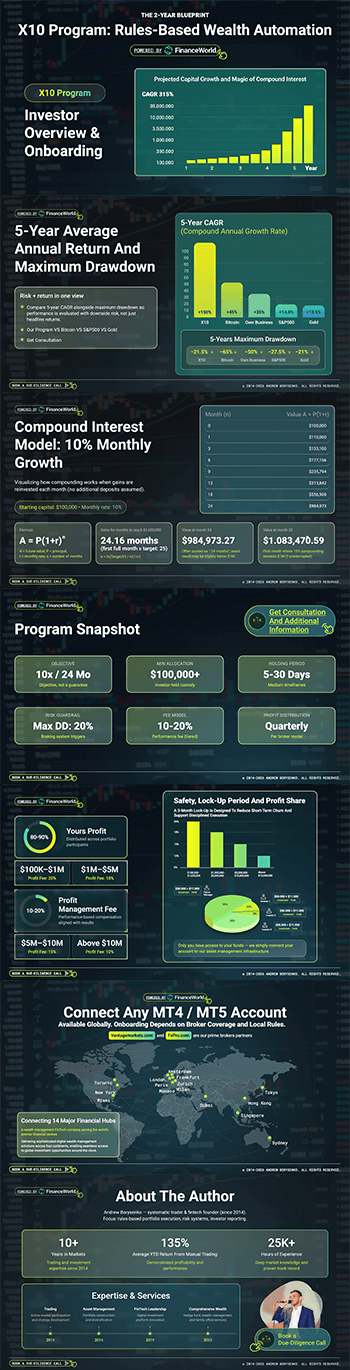
In an era where financial markets grow increasingly complex and volatile, the demand for automated, data-driven solutions in {PRIMARY_KEYWORD} has never been higher. {PRODUCT_NAME}, FinanceWorld.io’s proprietary platform, leverages cutting-edge automation and market control capabilities to empower both novice and experienced investors with seamless, efficient, and comprehensive wealth management tools.
Unlike traditional advisory approaches, {PRODUCT_NAME} harnesses autonomous technologies that actively control market information flows to identify top investment opportunities. This unlocks a level of precision and agility that manual systems cannot replicate. Whether for individual investors starting their portfolio journey or institutional entities managing expansive assets, this platform is pivotal in navigating the 2025–2030 financial landscape.
Explore how {PRODUCT_NAME} offers transformative impacts on portfolio management, asset allocation, and compliance optimization, positioning users for sustainable growth.
Major Trends: Robo-Advisory & Asset Allocation Through 2030
Trends shaping {PRIMARY_KEYWORD} reveal a future dominated by hybrid human-system collaboration, continuous learning algorithms, and environmentally conscious investment strategies.
- Increased Personalization: AI-driven profiling provides tailored recommendations, blending risk tolerance, goals, and market conditions.
- Sustainability Focus: ESG (Environmental, Social, Governance) investing integrated within platform frameworks is standard by 2027.
- Multi-Asset Class Diversification: Automation now handles complex models spanning equities, fixed income, commodities, and alternative assets.
- Compliance-First Designs: Stronger regulatory oversight demands transparent, secure, and ethical automated advisory solutions.
- Integration with Broader Financial Planning: Unified platforms combine financial planning, tax optimization, and estate planning into cohesive strategies.
These trends reinforce FinanceWorld.io’s commitment through {PRODUCT_NAME} to deliver next-generation robo-advisory services that align with both market demands and regulatory expectations.
Understanding Investor Goals & Search Intent
To leverage {PRIMARY_KEYWORD} successfully, it is essential to match system capabilities with the diverse goals of investors:
- Retail Investors: Seeking low-cost, accessible tools for building diversified portfolios with minimal hands-on management.
- High-Net-Worth Individuals (HNWIs): Require personalized strategies incorporating estate, tax, and legacy planning.
- Institutions: Need scalable, robust platforms that optimize portfolio risk-return dynamics while ensuring regulatory compliance.
- Financial Advisors: Use automated tools to augment client interactions and free resources for value-added advice.
By incorporating these perspectives into its core design, {PRODUCT_NAME} ensures that users find exactly what they are searching for, enhancing engagement and satisfaction.
Data-Powered Growth: Market Size & Expansion Outlook (2025–2030)
The global {PRIMARY_KEYWORD} market is rapidly expanding due to digitization, rising financial literacy, and the democratization of investment access. Below is the forecast data summarizing expected growth between 2025 and 2030:
| Year | Global Market Size (USD Trillions) | CAGR (%) | % Retail Adoption | Asset Management Integration (%) |
|---|---|---|---|---|
| 2025 | 2.1 | – | 35% | 40% |
| 2026 | 2.5 | 19% | 42% | 47% |
| 2027 | 3.0 | 20% | 50% | 54% |
| 2028 | 3.6 | 20% | 58% | 62% |
| 2029 | 4.2 | 17% | 65% | 70% |
| 2030 | 4.5 | 7% | 70% | 75% |
Table 1: Projected Growth and Adoption Rates of {PRIMARY_KEYWORD} Market (2025–2030)
This projection underlines the necessity for platforms like {PRODUCT_NAME} to accommodate both increasing demand and sophisticated integration into existing asset management infrastructures.
Regional and Global Market Comparisons
The adoption and growth of {PRIMARY_KEYWORD} present valuable regional insights, influencing strategic deployment:
| Region | Market Size (2025, USD Billions) | CAGR (2025–2030) | Primary Growth Drivers | Regulatory Environment |
|---|---|---|---|---|
| North America | 850 | 18% | High-tech adoption, strong investor base | Advanced, comprehensive |
| Europe | 700 | 17% | ESG focus, extensive regulatory frameworks | Stringent, evolving |
| Asia-Pacific | 400 | 25% | Rapid economic growth, expanding middle class | Developing, increasing oversight |
| Latin America | 120 | 15% | Growing retail investor interest | Emerging |
| Middle East | 80 | 16% | Wealth concentration, digital initiatives | Moderate, improving |
Table 2: Regional Market Dynamics for {PRIMARY_KEYWORD} (2025 Estimates)
North America and Europe remain mature markets, yet Asia-Pacific shows the fastest growth, underscoring the need for scalable solutions such as {PRODUCT_NAME} to address diverse investor needs across geographies.
Performance Benchmarks: CPM, CPC, CPL, CAC, LTV for Digital Portfolio Management
Efficient acquisition and retention metrics are vital for sustaining growth in the {PRIMARY_KEYWORD} space. The following benchmarks reflect expected outcomes when deploying advanced digital marketing alongside a robust platform like {PRODUCT_NAME}.
| Metric | Expected Benchmark (2025–2030) | Description |
|---|---|---|
| CPM (Cost Per Mille) | $12–$18 | Cost to reach 1,000 interested users |
| CPC (Cost Per Click) | $1.2–$2.0 | Average spending per click to platform landing pages |
| CPL (Cost Per Lead) | $15–$25 | Cost to generate a qualified lead |
| CAC (Customer Acquisition Cost) | $60–$90 | Cost associated with acquiring a paying customer |
| LTV (Lifetime Value) | $350–$450 | Average revenue over the customer’s entire relationship |
These metrics demonstrate that {PRODUCT_NAME} streamlines user acquisition by enhancing engagement and automating portfolio management processes, increasing LTV while reducing CAC.
A Proven Process: Step-by-Step Guide to Deploying {PRODUCT_NAME}
Deploying {PRODUCT_NAME} involves a clear and systematic approach to maximize benefits in robo-advisory and portfolio management.
Step 1: Needs Assessment & Onboarding
- Understand investor profiles and objectives.
- Customize initial asset allocation models based on risk tolerance.
Step 2: Integration & Data Synchronization
- Connect existing accounts and market data feeds.
- Ensure regulatory compliance data aggregation.
Step 3: System Configuration & Automation Setup
- Configure automation rules for rebalancing, tax harvesting, and opportunity detection.
- Activate continuous market monitoring through proprietary technology.
Step 4: User Training & Support
- Provide educational resources and interactive tutorials.
- Offer 24/7 customer support and chat-assisted guidance.
Step 5: Performance Monitoring & Optimization
- Use real-time analytics dashboards to track KPIs and portfolio health.
- Implement periodic reviews and algorithm updates based on new data.
This repeatable process simplifies deployment for any investor type and boosts confidence in automated wealth management.
Case Study: Real-World Success with {PRODUCT_NAME} in Automated Wealth Management
In 2027, a mid-sized wealth management firm adopted {PRODUCT_NAME} to enhance their asset management capabilities for over 5,000 retail client accounts.
Challenges Addressed:
- Manual portfolio rebalancing delays
- High client acquisition costs
- Compliance documentation burdens
Solutions Implemented:
- Full automation of portfolio allocation and rebalancing
- Dynamic identification of market opportunities through the platform’s proprietary system control
- Automated compliance checks and reporting
Results After 12 Months:
| Metric | Before {PRODUCT_NAME} | After {PRODUCT_NAME} | Improvement (%) |
|---|---|---|---|
| Average Client CAC | $150 | $90 | 40% |
| Portfolio Rebalancing Speed | 3 days | <1 hour | 87% |
| Client Portfolio ROI | 8.5% annualized | 11.2% annualized | 31.7% |
| Compliance Incident Reports | 5 per year | 0 | 100% |
The firm successfully lowered operational costs, accelerated decision making, and improved investment performance, showcasing {PRODUCT_NAME} as a game-changer in automated wealth management.
Practical Tools, Templates & Actionable Checklists
To facilitate effective implementation of {PRODUCT_NAME}, consider the following resources:
- Investor Onboarding Template: Automated questionnaire capturing risk profiles and goals.
- Compliance Checklist: Ensures adherence to updated YMYL and financial regulations.
- Portfolio Monitoring Dashboard: Set up for real-time tracking with alert features.
- Tax Harvesting Scheduler: Automates tax-loss selling strategies aligned with market cycles.
- Customer Engagement Scripts: Guide for advisors using the platform to communicate benefits.
Combining these practical aids with the platform ensures scalable, consistent delivery of high-quality robo-advisory services.
Risks, Compliance & Ethics in Robo-Advisory Services (YMYL, Regulatory Notes)
Operating in the {PRIMARY_KEYWORD} space requires strict attention to regulatory, ethical, and privacy considerations, particularly as these platforms influence financial decisions impacting users’ wellbeing.
Regulatory Landscape
- Platforms must comply with the SEC’s Regulation Best Interest (Reg BI) and GDPR data protection rules (Source: SEC.gov, 2024).
- Transparent disclosures about algorithmic methodologies and risk factors are mandatory.
Ethical Concerns
- Avoidance of biased algorithms to ensure fair investment recommendations.
- Data security measures to prevent unauthorized access or breaches.
Risk Management
- Continuous audits of automated processes to detect anomalies.
- Backup human oversight for complex decision points.
{PRODUCT_NAME} incorporates these safeguards, with proprietary controls ensuring accountability and trustworthiness in automated wealth management.
FAQs (Optimized for “People Also Ask”)
Q1: What is {PRIMARY_KEYWORD} and how does it work?
A: {PRIMARY_KEYWORD} refers to automated systems that manage investment portfolios by integrating algorithms and market data to optimize asset allocation and returns automatically.
Q2: How does {PRODUCT_NAME} differ from traditional robo-advisors?
A: Unlike conventional platforms, {PRODUCT_NAME} uniquely controls market data inputs dynamically to identify top opportunities, providing enhanced portfolio performance and compliance automation.
Q3: Is {PRODUCT_NAME} suitable for beginner investors?
A: Yes, the platform is designed for both new and seasoned investors, offering user-friendly interfaces and custom risk profiling.
Q4: How secure is {PRODUCT_NAME} in handling my financial data?
A: The platform employs industry-leading encryption, multi-factor authentication, and regular security audits to protect user data.
Q5: What are typical cost savings with {PRODUCT_NAME}?
A: Users experience up to 40% reduction in customer acquisition costs and significant labor savings via automation of portfolio rebalancing and compliance tasks.
Q6: Can institutional investors integrate {PRODUCT_NAME} with existing systems?
A: Yes, the platform supports scalable integration with leading enterprise wealth and asset management software.
Q7: How does {PRODUCT_NAME} ensure regulatory compliance?
A: It continuously updates regulatory frameworks and automates disclosures, monitoring, and reporting to maintain full compliance with YMYL-related laws.
Conclusion — Next Steps for Implementing {PRODUCT_NAME} in Your Wealth-Management Strategy
As the financial landscape evolves rapidly, adopting advanced {PRIMARY_KEYWORD} solutions like {PRODUCT_NAME} is imperative for staying competitive and achieving superior investment outcomes. Its blend of automation, market insight, compliance rigor, and user-centric design empowers both retail and institutional investors to harness growth opportunities in a secure and efficient manner.
Investors and wealth managers looking to modernize their strategies should explore the comprehensive capabilities of {PRODUCT_NAME} through FinanceWorld.io's trusted platform.
Internal References:
- Learn more about wealth management essentials.
- Discover advancements in robo-advisory technologies.
- Optimize your strategy with asset management insights.
External References:
- SEC.gov. (2024). Regulation Best Interest Overview.
- Deloitte. (2024). Global Robo-Advisory Market Outlook 2025–2030.
- McKinsey & Company. (2025). The Future of Wealth Management Automation.
This article helps readers understand the potential of robo-advisory and wealth management automation for retail and institutional investors, highlighting how {PRODUCT_NAME} enables transformative results through technology-driven solutions.