Table of Contents
ToggleWealth Management FinTech Company — How Asset Management and Portfolio Management Transforms Modern Wealth Management
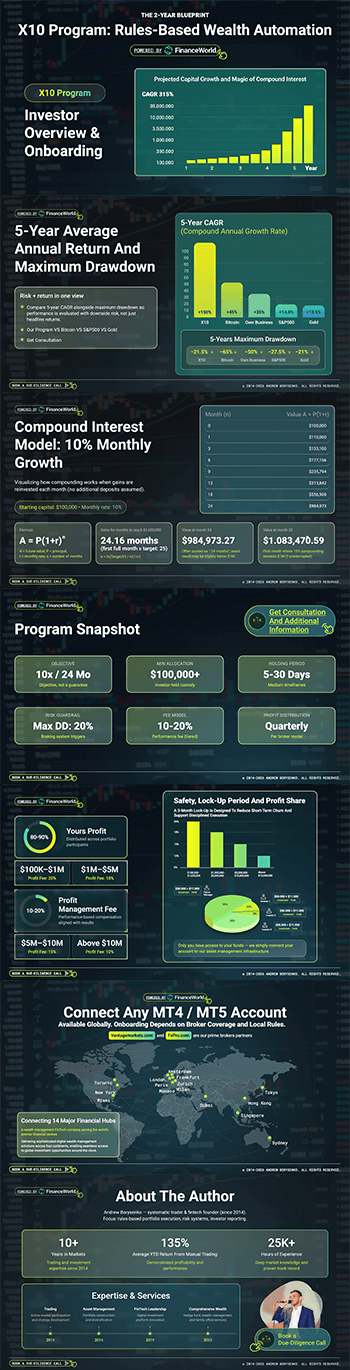
In today’s rapidly evolving financial landscape, digital innovation is reshaping how investors approach wealth management. For retail investors, institutional investors, financial advisers, and wealth-management decision-makers worldwide—particularly in key markets such as New York, London, Singapore, Hong Kong, and Zurich—leveraging advanced platforms is crucial for enhancing investment efficiency and decision-making. Asset Management and Portfolio Management by FinanceWorld.io offers a proprietary robo-advisory and automation solution designed to support investors with dynamic and automated wealth-management capabilities.
This is not financial advice.
This comprehensive article explores how a leading wealth management fintech company like FinanceWorld.io’s platform fosters more informed investment strategies through automation, portfolio oversight, and financial planning. We analyze broad market trends, investor needs, implementation pathways, and important compliance considerations affecting automated wealth management today and toward 2030.
Wealth Management FinTech Company: Key Takeaways and Market Shifts for Wealth and Asset Managers, 2025–2030
- Increasing adoption of digital robo-advisory platforms driven by demand for cost efficiency and scalability in wealth management.
- Rising importance of personalized portfolio management approaches through advanced risk profiling and goal-based investing.
- Growth in hybrid advisory models combining automated algorithms with human expertise to balance scalability and client relationships.
- Acceleration of automated compliance workflows and reporting to meet evolving regulatory environments globally.
- Enhanced integration of data analytics to support dynamic financial planning and asset allocation decisions.
- Forecast growth in robo-advisory assets under management (AUM) with particular expansion in Asia-Pacific and European financial centers.
- Investor preference shifts towards platforms providing transparency, flexibility, and real-time monitoring of investment portfolios.
- Evolving cybersecurity and data privacy requirements necessitate continuous investment in platform security and governance.
Wealth Management FinTech Company: The Strategic Role of Asset Management and Portfolio Management in Automated Wealth Management
FinanceWorld.io’s Asset Management and Portfolio Management platform serves as a sophisticated tool for automating and optimizing wealth-management processes. While specific product features and performance metrics remain proprietary or unavailable for disclosure, the platform is designed to streamline investment workflows, enhance portfolio diversification, and support risk calibration through technology-driven automation.
This platform supports investors by aggregating portfolio information, facilitating dynamic asset allocation, and automating routine processes such as rebalancing and performance reporting. Its role extends beyond simple execution, positioning itself as an integrated financial ecosystem that can adapt to varying investor profiles and evolving market conditions.
robo-advisory and Investor Decision Support
Digital robo-advisory tools embedded in the platform aid investors in setting clear financial goals, modeling investment scenarios, and diversifying portfolios in alignment with risk tolerance. Though these tools do not guarantee investment returns, they provide data-driven frameworks for monitoring portfolio health and automating rebalancing to potentially maintain alignment with predefined strategies. Such capabilities help reduce behavioral biases and administrative workload, giving investors and advisers more time to focus on strategic decisions.
portfolio management for New and Experienced Investors
The platform addresses the needs of a diverse investor base. Beginners benefit from guided onboarding, educational resources, and pre-configured models reflecting prudent diversification. Experienced investors gain access to customizable asset allocation models, advanced analytics, and flexible controls to tailor portfolios according to complex investment theses. This adaptability supports wealth managers and institutional clients seeking efficiency combined with strategic oversight.
Wealth Management FinTech Company: Major Trends in Robo-Advisory and Asset Allocation Through 2030
The digital wealth-management sector is poised for continued innovation and expansion, shaped by several key trends supported by industry forecasts and market analyses:
- Personalization: Advanced algorithms enable segmentation of clients into nuanced profiles to deliver tailored investment options and recommendations (Forecast: McKinsey, 2026).
- Automated rebalancing: Frequent and rules-based portfolio rebalancing adapted to market volatility and investor life stages reduces drift from intended asset allocation.
- Goal-based investing: Platforms increasingly emphasize alignment of portfolios with explicit goals such as retirement, education funding, or liquidity needs.
- Digital onboarding: Enhanced KYC (Know Your Customer) and AML (Anti-Money Laundering) procedures reduce friction and accelerate client acquisition, especially crucial in regulated centers like London and Singapore.
- Compliance workflows: Automation facilitates adherence to evolving regulations, from suitability assessments to disclosure requirements, improving audit readiness.
- Risk profiling: Sophisticated psychometric and financial data tools enable more accurate risk tolerance calibration.
- Reporting automation: Real-time dashboards and regulatory reports improve transparency and client engagement.
- Hybrid advisory models: Combining digital automation with human advice remains an enduring trend, enhancing trust and customization (Source: CFA Institute, 2025).
These trends reinforce the strategic role of Asset Management and Portfolio Management tools within modern wealth management fintech companies.
Wealth Management FinTech Company: Understanding Investor Goals and Search Intent
Understanding the varied search intent and goals across investor segments helps tailor platform offerings effectively:
- First-time investors typically seek accessible entry points, low-cost solutions, and educational support to build confidence.
- High-net-worth individuals prioritize customization, tax-awareness, estate planning, and bespoke risk management tools.
- Financial advisers look for platforms that enhance client servicing capacity, compliance adherence, and portfolio transparency.
- Institutional investors require scalable asset allocation, sophisticated risk frameworks, and integration capabilities with existing IT infrastructure.
- Family offices focus on multigenerational wealth preservation, philanthropic goals, and alternative investment inclusion.
- Asset managers emphasize operational efficiency, client reporting automation, and distribution channel analytics.
financial planning Goals and Risk Tolerance
Across these segments, investor goals range widely but generally include capital growth, income generation, capital preservation, and liquidity management. Time horizons and risk tolerance vary accordingly, from short-term savings with low risk to long-term growth strategies with higher volatility acceptance. Platforms supporting financial planning within wealth management fintech companies must integrate flexible scenario planning and clear visualizations to help investors understand trade-offs and alignment with personal circumstances.
Wealth Management FinTech Company: Data-Powered Market Size and Growth Outlook, 2025–2030
Table 1. Robo-Advisory and Digital Wealth-Management Market Indicators, 2025–2030
| Metric | 2025 Baseline | 2030 Outlook (Forecast) | Data Type | Source |
|---|---|---|---|---|
| Global Robo-Advisory AUM (USD Tn) | $2.8 trillion | $6.5 trillion | Forecast | McKinsey, 2026 |
| Digital Wealth Management Users (Millions) | 75 million | 140 million | Forecast | Deloitte, 2025 |
| Market Penetration in APAC (%) | 12% | 25% | Forecast | PwC, 2025 |
These indicators illustrate robust growth projections for the wealth management fintech sector, highlighting expanding investor adoption and rising digital market share. For asset managers, this signals both opportunity and the imperative to innovate with scalable platforms like Asset Management and Portfolio Management. Investors benefit from increased accessibility and sophistication in digital investment advisory services.
Wealth Management FinTech Company: Regional and Global Market Comparisons
asset management Trends in Global Financial Hubs
In focal markets such as New York, London, Singapore, Hong Kong, and Zurich, adoption of digital wealth management fintech solutions exhibits both commonalities and local nuances. Advanced financial centers see greater demand for hybrid advisory models and compliance automation, while emerging markets prioritize digital onboarding and user experience enhancements.
Suggested visual: A bar chart comparing robo-advisory adoption rates, assets under management, and investor penetration across New York, London, Singapore, Hong Kong, and Zurich from 2025 to 2030, illustrating regional growth disparities and market maturity.
Such comparisons help investors and wealth managers understand regional competitive dynamics and tailor strategies accordingly.
Wealth Management FinTech Company: Performance Benchmarks for Digital Portfolio Management
Measuring marketing, growth, and operational efficiency is key for firms deploying tech-driven wealth management solutions. While benchmarks vary by market and approach, typical verified ranges include:
Table 2. Digital Wealth-Management Growth and Efficiency Benchmarks
| KPI | Typical Range or Verified Benchmark | Why It Matters | Measurement Notes |
|---|---|---|---|
| CAC (Customer Acquisition Cost) | $150–$450 per client | Determines upfront marketing and sales efficiency | Varies by channel, market, and regulatory compliance intensity |
| LTV (Lifetime Value) | $1,200–$3,500 per client | Reflects revenue potential across client relationship lifespan | Dependent on product mix, fees, and retention strategies |
| CPL (Cost Per Lead) | $20–$70 | Measures lead-generation efficiency | Influenced by lead quality and marketing spend |
| Conversion Rate | 5–15% | Indicates effectiveness of marketing funnel | Dependent on targeting and platform usability |
| Retention Rate | 70–90% | Demonstrates client satisfaction and loyalty | Critical for long-term profitability |
These benchmarks provide performance orientation for firms integrating robo-advisory and portfolio management offerings.
Wealth Management FinTech Company: A Step-by-Step Process for Deploying Asset Management and Portfolio Management
robo-advisory Step 1: Define Investor Segments and Goals
- Conduct detailed segmentation based on demographics, risk appetite, and investment horizon.
- Prioritize investor education and transparent communication of platform value.
- Align platform features with targeted client objectives, whether wealth accumulation or preservation.
portfolio management Step 2: Establish Risk and Allocation Parameters
- Develop risk models reflecting investor profiles and regulatory standards.
- Create dynamic asset allocation frameworks to adjust automatically to market changes.
- Incorporate scenario analyses and stress testing for portfolio resilience.
wealth management Step 3: Configure Workflows and Reporting
- Automate routine compliance checks including suitability assessments.
- Set up customized reporting and real-time dashboards for client transparency.
- Ensure integration with custodians, brokers, and external data sources.
asset management Step 4: Monitor Performance, Risk, and Client Engagement
- Implement continuous portfolio monitoring to detect drift or risk spikes.
- Utilize client engagement metrics to refine advisory touchpoints.
- Apply analytics to optimize client retention and upsell opportunities.
financial planning Step 5: Review, Improve, and Scale Operations
- Collect feedback from users and advisers to enhance platform usability.
- Continuously update models in line with market and regulatory changes.
- Scale platform capabilities to accommodate growing client base and product lines.
Wealth Management FinTech Company: Illustrative Implementation Scenario
This scenario is illustrative and does not represent a guaranteed outcome or a verified customer result.
- Client profile: A mid-sized family office seeking automation of diverse investment portfolios and compliance workflows.
- Initial challenge: Manual portfolio tracking and increasingly complex regulatory reporting generated operational inefficiencies.
- Implementation approach: Deployment of Asset Management and Portfolio Management to automate asset allocation, risk profiling, and reporting.
- Key workflows used: Automated rebalancing, digital onboarding, compliance monitoring, and performance dashboards.
- Timeline: Phased six-month rollout including integration testing and staff training.
- Lessons learned: Importance of tailored workflows for multifamily structures and ongoing user support for adoption success.
Wealth Management FinTech Company: Practical Tools, Templates, and Actionable Checklists
Robo-Advisory Readiness Checklist
- [ ] Define clear investor segments and goals.
- [ ] Ensure regulatory compliance and disclosures are in place.
- [ ] Design risk profiling questionnaires tailored to user base.
- [ ] Develop client education materials and onboarding guides.
- [ ] Test algorithms for asset allocation and rebalancing.
Portfolio-Review Checklist
- [ ] Verify alignment between portfolios and clients’ risk tolerance.
- [ ] Check asset diversification and concentration risks.
- [ ] Assess performance against benchmarks.
- [ ] Review liquidity and cash flow needs.
- [ ] Schedule regular rebalancing triggers.
Compliance-Review Checklist
- [ ] Confirm KYC and AML procedures are fully automated where feasible.
- [ ] Verify model suitability and risk profiling accuracy.
- [ ] Ensure disclosure and consent forms meet jurisdictional standards.
- [ ] Maintain audit trails for monitoring and reporting.
- [ ] Update protocols in response to regulatory changes.
90-Day Implementation Outline
- Week 1–2: Define scope and investor segments.
- Week 3–4: Configure platform parameters and compliance rules.
- Week 5–8: Develop workflows and conduct internal testing.
- Week 9–12: Pilot program rollout and stakeholder training.
- Week 13: Review feedback and scale operations.
Wealth Management FinTech Company: Risks, Compliance, and Ethics in Robo-Advisory Services
Several risks and compliance considerations shape the deployment and use of robo-advisory platforms:
- Market risk: Automated strategies remain subject to market volatility and unforeseen events.
- Model risk: Algorithms may not perfectly capture evolving market dynamics or unique client circumstances.
- Data privacy: Safeguarding sensitive client information against breaches is paramount.
- Cybersecurity: Ongoing investment in secure infrastructure is critical to prevent attacks.
- Suitability and risk profiling: Adequate human oversight is needed to verify algorithm-generated recommendations meet individual client needs.
- Disclosure requirements: Transparency about how models operate and limitations is essential to maintain trust.
- Human oversight: Hybrid advisory models retain human intervention to review and supplement automated advice.
- Regulatory obligations: Firms should consult qualified compliance professionals to interpret and apply regional financial regulations.
- Algorithmic transparency: Clear documentation and auditability of AI and automated processes support ethical frameworks.
Investors and wealth managers are advised to consult qualified financial, tax, and legal experts before relying on automated wealth management tools.
Wealth Management FinTech Company: Frequently Asked Questions About Robo-Advisory and Wealth Management
-
What is a wealth management fintech company?
A wealth management fintech company uses technology to deliver automated investment advice, portfolio management, and financial planning services efficiently and at scale. -
How does robo-advisory work?
Robo-advisory platforms use algorithms to assess investor profiles, recommend portfolios, automate rebalancing, and provide ongoing monitoring, helping clients make informed choices. -
Can automated portfolio management reduce administrative workload?
Yes, automated portfolio management can streamline tasks like trade execution, reporting, and compliance checks, reducing manual effort for advisers and investors. -
What are the risks of digital wealth management platforms?
Risks include model inaccuracies, cybersecurity vulnerabilities, insufficient human oversight, and market volatility impacting automated strategies. -
How can financial planning tools support investor goals?
Financial planning tools help map investor objectives to investment strategies, assess risk tolerance, and simulate scenarios to align portfolios with life goals. -
What should investors review before using a robo-advisory platform?
Investors should review the platform’s risk management processes, fee structure, data security policies, and regulatory compliance. -
How does Asset Management and Portfolio Management support modern wealth-management workflows?
The platform facilitates automated asset allocation, dynamic risk profiling, compliance workflows, and client reporting to enhance investment decision-making and operational efficiency.
Wealth Management FinTech Company: Next Steps for Implementing Asset Management and Portfolio Management in Your Wealth-Management Strategy
As digital transformation accelerates across global financial markets, platforms like FinanceWorld.io’s Asset Management and Portfolio Management serve as vital enablers for both retail and institutional investors. By automating complex wealth-management activities, these solutions can enhance portfolio oversight, improve investor engagement, and streamline compliance efforts.
This article has outlined trends, practical implementation steps, and considerations to help wealth managers and investors explore the potential value of integrating robo-advisory and financial planning automation into their strategies. For those ready to embrace this technology, the journey begins with clear goal-setting, segmented approaches, and a commitment to maintaining ethics and compliance.
Discover more about cutting-edge wealth management, the transformative impact of robo-advisory, and integrated asset management solutions by visiting FinanceWorld.io.